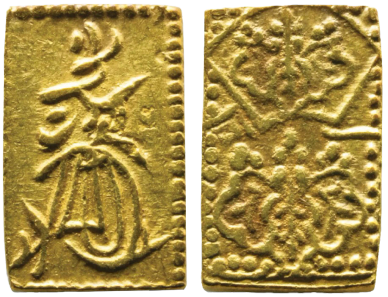
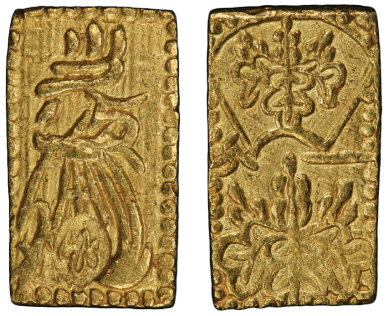
In mid-2024, I began an in-depth die study of Keicho ichibuban in hopes of understanding them better. Well over a year later, the paper is complete, and I believe this research has uncovered a more comprehensive way to divide Keicho ichibuban. It has also revealed some unexpected rarities, and - I believe - clues about the purpose of Double Hon Keicho ichibuban.
The paper is available below in both English and Japanese (in the same file). Refer to the table of contents to jump to your preferred language. It assumes a general familiarity with the design elements of ichibuban but provides most other relevant background information, so it should be accessible to most collectors of the series. (If you have any questions about design elements, some of them may be answered here.)
This paper was first released in November 2025, and any updates can be found on this page going forward. At this point, there have been no further updates or discoveries.
I welcome any and all feedback. The entire goal of this die study is to begin a conversation with other researchers and collectors and provide a basis for further research.
Please download the PDF below for the full die study.
Keicho Die Study - Version 1.0 (pdf)
DownloadBelow I've pulled out some of the primary reference pages from the full die study as standalone files for easier reference. These may be shared and published freely as long as credit is given (Lianna Spurrier, rectanglecoins.com, 2025).
Below you will find quick reference images of each distinct type identified in the die study. I'm gradually adding pages showing all individual dies for some types (which are linked below as well). This is an ongoing project.
Refer to pages 40-43 (6-9 for Japanese) in the full PDF above for criteria to attribute calligraphy style (K, S, E, H, U, or Y) and time period (Early, Intermediate, or Late).
Single Hon pieces have a character in the top right corner of side A; Double Hon pieces have the same character in both top corners of side A.
Minor types are discussed in more detail on pages 54-57 (20-23 for Japanese), but all three are very rare.


This paper received the 2026 NLG Award for Best Numismatic News or Feature Article In a Non-Numismatic Publication.